 Skip to content

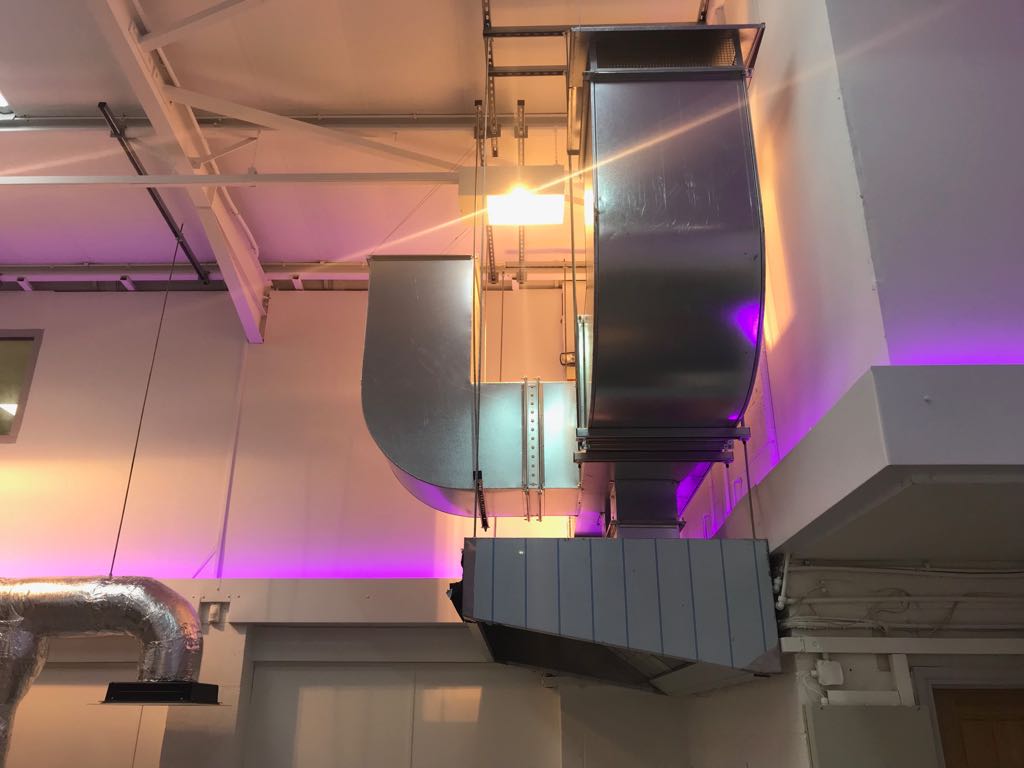
There are various types of ducting used for ductwork installation
Polyurethane insulation panels
The most common type of ductwork is constructed of metal sheets which is installed and then insulated with lagging. Rigid Ductwork comes ready insulated so does not need to be insulated as a separate process. This method is quicker as it is installed in a single fix. Aluminium Ductwork is lightweight and easy to install and suspend from ceilings. Various shapes can be attached and installed on the premises to fit the specific area.
Ductwork Installation or modification begins with preparing all of the elbows and tapers from the drawings created, the seams are then bonded together with aluminium tape and glue. Any internal joints are sealed using sealant.
Fiber glass duct board (non metallic)
This type of ductwork installation uses fibreglass as a non metallic alternative with insulation already built in and sound absorbing properties producing a very quiet air conditioning system.
Flexible Ducting
Flexible ductwork is also know as flex in the industry and usually made of flexible plastic over a metal coil. They are usually insulated with fibreglass or glass wool. Flexible ductwork is a very favourable option due to its ease of installation and used to connect to rigid ductwork. This type of ductwork is effected by pressure loss so any use of flex is kept to a maximum of 15 foot runs or lengths in the design stage. Although flex ductwork is ideal for tight corners and difficult bends, any kinks must be avoided to prevent problems in the flow of air.
Fabric
Constructed out of polyester material, this type of ductwork can distribute air to an area very effectively. Fabric ducting is often misconstrued as it is actually an air distribution device rather than an actual duct.


